In May, Google published its first official guide to optimising for generative AI features in Search.
It’s worth reading. But I’ll save you some time.
The headline message is this: AI search is still search. And the bar for what counts as good enough has just gone up.
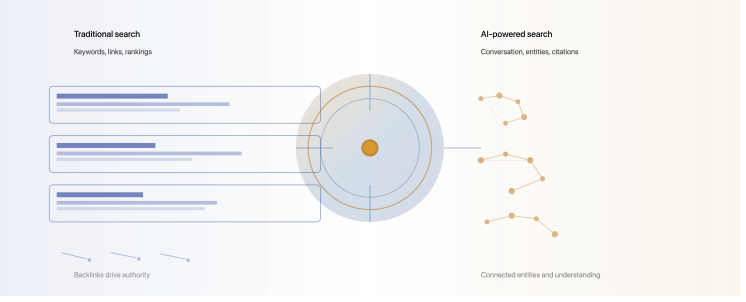
It’s still SEO. It’s always been SEO.
There’s been a frantic rush to rename everything since AI entered the search conversation. AEO. GEO. Answer optimisation. AIO visibility. Prompt optimisation. At some point someone is going to run out of letters.
Google’s guide cuts through all of it. AI Overviews and AI Mode still pull from Google’s Search index. They still rely on Google being able to find your content, crawl it, understand it, and trust it. The underlying mechanics haven’t changed.
What has changed is what “good enough” looks like. AI systems are comparing, summarising and selecting from multiple sources in real time. If your content is bland, generic, or just a tidier version of what everyone else has already said, there’s increasingly little reason for it to get picked.
For B2B marketers specifically, that should be uncomfortable reading. Because a lot of B2B content is exactly that.
The commodity content problem
Google’s guide puts particular weight on original perspectives, first-hand experience, and information that goes beyond common knowledge. It specifically warns against recycling what others have already said.
Have a look at your own content and ask honestly: how much of it could have been written by anyone, about anyone, in any sector?
The “ultimate guide” that isn’t ultimate. The sector page that swaps one industry name for another. The thought leadership article with no actual thought in it. The service page that describes the service but gives the buyer no real reason to care.
This content was never that effective. AI search just makes it harder to hide.
The answer isn’t to publish more. It’s to publish things that only you can credibly say. Insights from real client work. Common mistakes you actually see. Honest buying advice. Real data from your own experience. The kind of content that requires someone who knows what they’re talking about to write it, because no one else could.
Stop hiding the useful stuff
B2B brands have a long tradition of burying the good answers. Pricing hidden. Comparison information absent. The most useful content gated. The clearest explanations saved for the sales call.
That was already creating friction before AI. Now it’s a bigger problem.
Buyers are forming opinions before they ever speak to sales. If AI search results are helping them compare options, understand risks, and narrow down suppliers, your content needs to be in that conversation. Which means the answers need to be visible, not hidden three clicks behind a form.
That doesn’t mean opening the kimono on everything. It means being honest about what buyers actually want to know:
- Is this the right solution for my problem?
- Is this company credible?
- What makes them different?
- What are the risks?
- What should I compare them against?
The brands that answer those questions clearly will be at an advantage. The ones that respond with vague copy and gated PDFs may not make the shortlist at all.
Technical SEO still matters. Obviously.
There’s a temptation to read Google’s AI guide as a pure content brief and ignore the technical side. Don’t do that.
Google is clear that how it finds and processes your pages is still central to how AI systems access your content. Fast, crawlable, indexable pages with solid internal linking, clear semantic structure, and minimal JavaScript rendering issues. The fundamentals haven’t changed.
A great piece of content that Google can’t crawl properly doesn’t help anyone.
One thing to avoid
If your takeaway from all of this is “we need a page for every possible AI prompt,” stop right there.
Google specifically warns against creating thin pages for every keyword variation or question to try and manipulate AI responses. One clear, high-quality, properly structured page on an important topic is worth far more than fifty shallow ones trying to pattern-match against every possible search variation.
AI systems work from meaning, not keyword matching. Become the best available source for the underlying question, and you don’t need to game the variations.
What this actually means for your strategy
The short version: don’t panic, but do improve.
The businesses that will do well in AI search are the ones that were doing SEO properly in the first place. Useful content, genuine expertise, solid technical foundations, and answers that help buyers make decisions rather than stall them.
If that’s not where you are yet, Google’s guide is a useful checklist. But the work it describes isn’t new work. It’s the work that was always supposed to happen.
AI search has just made the gap between doing it well and doing it badly much harder to ignore.

